

Optimize Your Pipelines with these CI/CD Solutions
Learn CI/CD best practices for optimizing your pipelines using Continuous Integration and Continuous Delivery tools for DevOps test automation.
CI/CD pipeline experts from Perforce Software have written this eBook that explains:
- What Continuous Integration is and how it works.
- What CI automation DevOps tools are and how they can shift testing left.
- How to effectively pair static analysis tools — like Perforce Klocwork and Perforce QAC — with CI/CD best practices.
- How DevOps test automation with Perforce Klocwork and Perforce QAC accelerates analysis delivery.
To learn more about how to adopt and enforce CI/CD solutions, download this eBook.
Static Analysis: DevOps Test Automation for Deep Static Analysis
Perforce Klocwork and Perforce QAC are the tools to shift left testing for software security, quality, and reliability issues. AI-assisted code remediation also draws on that data to suggest fixes that reflect how your code behaves in your CI/CD pipeline, helping to enforce compliance with standards.
They are CI/CD tools that scale to projects of any size, integrate with large, complex environments and a wide range of developer tools, and provide control, collaboration, and reporting for the entire enterprise. This has made Klocwork and QAC the preferred static analyzers that keep DevOps test automation velocity high while enforcing continuous compliance for security and quality.

Secure, Safe, and Reliable Code

C, C++, C#, Rust, Java, JavaScript, Python, Kotlin

AI-assisted code remediation

Speed, Productivity, and Compliance
Perforce Static Analysis Key Features
Perforce Static Analysis tools are trusted by innovators across industries to detect defects early, automate code reviews, and achieve compliance at scale in embedded and mission-critical software.
Find Security Vulnerabilities with SAST
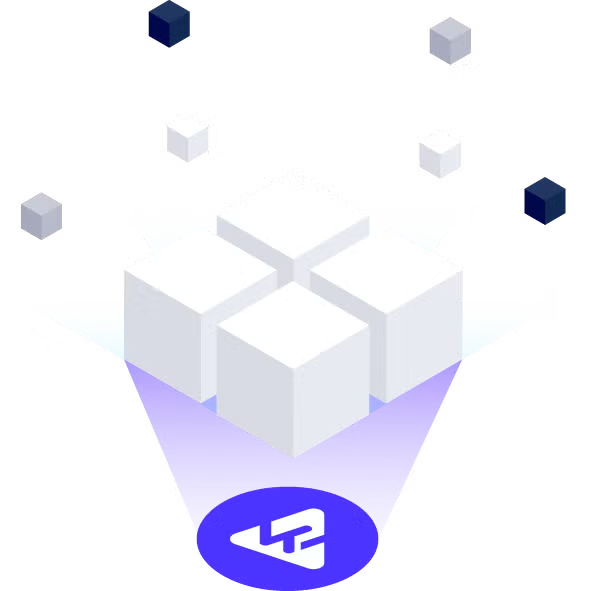
Fit Perforce Static Analysis seamlessly into your CI/CD pipeline. Our static application security testing (SAST) solution extends security analysis across the environments you already use, simplifies risk-based decision-making, and strengthens architecture and AI governance across globally distributed teams.
Keep Remediation Efforts Traceable and Accurate
Move into automated resolution with AI-assisted code remediation, delivering context-aware fix recommendations based on deep static analysis, so your teams can spend less time investigating findings and more time delivering quality software.
Project Streams
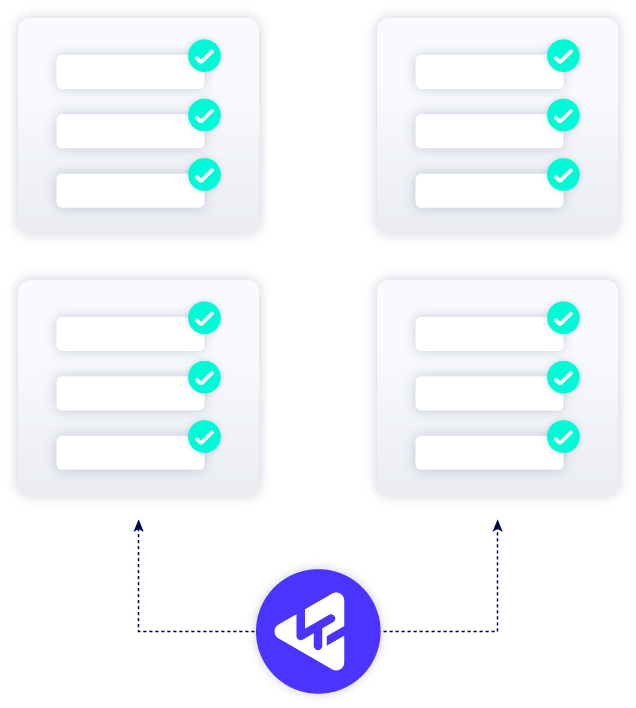
Project Streams provides easy management of shared code bases that have multiple variants or branches by simplifying project rule configuration, issue management, defect citing, reporting, and efficient data storage of analysis data.
DevOps Ready
Perforce Static Analysis tools are designed with Continuous Integration and Continuous Delivery foremost in our thinking, which makes it easy to include static code analysis as part of your CI/CD pipelines.

Control, Collaborate, and Report
The Perforce Validate platform is a centralized store of analysis data, trends, metrics, and configurations for codebases across the organization — accessed through a web browser.
The dashboard is highly customizable, enabling your developers, managers, and other stakeholders to control access permissions and workflows, view metrics for project quality, and produce compliance and security reports.
Designed for Developers
By seamlessly integrating static code analysis with the rest of your development toolset, Klocwork and QAC will shift-left defect detection and improve developer adoption as a tool for developer training and increasing productivity.
Industry Leaders Trust Perforce Static Analysis Tools




"With Klocwork we’ve been able to identify problems that would have been missed, and discover errors more quickly than through traditional manual analysis and testing. That’s allowed us to deliver the high-quality software we pride ourselves on and that our customers expect."
Frequently Asked Questions
CI/CD are popular software development practices for DevOps test automation and shortening feedback times.
Continuous Integration is the practice of automating the build and testing of code every time a change is made — and committing that code back to a central repository.
A Continuous Integration (CI) tool automates tasks such as building, testing, and validating code whenever developers commit to a shared repository. Tools such as Jenkins, GitHub, GitLab, and Azure Pipelines are commonly used for CI workflows. Klocwork and QAC can be integrated into CI pipelines to automate static code analysis and help identify quality, reliability, security, and compliance issues early in development.
Continuous Integration testing is the automated process of building and testing code changes whenever they are integrated into a shared repository. Its goal is to quickly identify defects, integrated issues, and regressions so they can be resolved before they impact downstream development.