
Stay Secure, Support Your Teams & Plan Ahead
Game developers have always been at the forefront of innovation. That’s why we believe their practices, tools, and technology have been gaining traction across industries, revolutionizing how organizations approach digital creation.
Game technology continues to break barriers and redefine what is possible—not just for games, but across industries worldwide. The evolution we’ve witnessed since our 2024 report demonstrates how these powerful tools are reshaping innovation, collaboration, and creation across sectors.
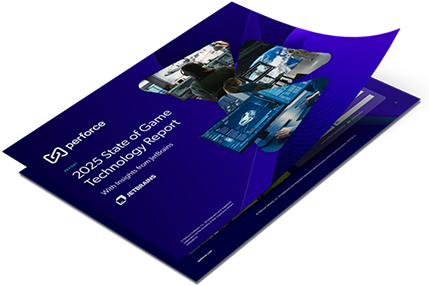
The 2025 State of Game Technology Report, featuring insights from JetBrains, captures this pivotal transformation as game engines and AI technologies transcend traditional boundaries to drive business value across diverse industries.
Some of our key findings include:
- 18% of respondents now use game engines for VR/AR (up from just 4% last year), 14% for visualization and simulation, 14% for 3D art creation, and 12% for film and television.
- While debates about ethics continue, in less than a year, 70% of respondents now integrate generative AI tools into their workflows (up from 65% last year).
- An impressive 86% of M&E respondents now use generative AI for content creation (44%), imaging and prototyping (35%), and code generation (33%), transforming creative processes while maintaining a human touch.
- Both Architecture/Engineering and Automotive/Manufacturing respondents (50%) cited a lack of team members as their top concern.
Get the Report
Download your copy of the report for 30+ pages of actionable data and expert insights, straight from industry professionals. Complete the form to download your free copy.
The report is the 2025 Game Technology edition of Perforce’s long running State of Game Development and Design report. Last year, we expanded our scope from the game development industry, game industry stats, and game industry future.
Our focus for the report was the impact of gaming technology and we explored widespread game technology trends and game engine adoption by industry. We also looked at game industry statistics, video game technologies, trends in the game development industry, and gaming and technology trends by region.
For those looking for insights beyond video game industry statistics, this year’s report also covers how gaming technology is impacting industries beyond the game development industry—including media and entertainment, automotive, education, and more.
In our State of Game Technology Report, we cover a broad range of game technology statistics and topics including—emerging technologies in gaming, game engine adoption, the global game engine market, video game industry statistics, the future of game development, current trends in the game development industry and more.
We also explored how gaming technology is impacting industries beyond the game development industry—including media and entertainment, automotive, education, and more.
The report responses reveal game engine use across industries, game engine adoption data, game engine growth, video game industry statistics, Unreal Engine adoption, Unity adoption, Godot adoption, the latest gaming technology, general game industry facts, and insights about the future in gaming.
The report includes several statistics around gaming technology—including game industry stats, the differences in games technology used by indie studios and AAA studios, and predictions from game developers on the future of technology gaming.