
Blog
April 29, 2026
How Test Data Management Supports Your Scaling Organization: Solutions, Use Cases, & Benefits

Data Management,
DevOps
Efficient test data management is a critical component of modern software development. With the demand for quality applications growing rapidly, managing and provisioning test data has become more challenging. In this blog, I’ll explore essentials of test data management, highlight its importance for DevOps initiatives, and discuss ways to overcome these common challenges.
Back to top
What is Test Data Management, and Why Do I Need It?
Test data management is the process for providing controlled data access to modern teams throughout the software development lifecycle (SDLC). After talking with customers, I’ve noticed this requirement always spans more than one type of data:
- Location: On-premises vs. Cloud (AWS, Azure, GCP, etc)
- Type: Oracle, SQL Server, PostgreSQL, MongoDB, etc.
- Purpose: AppDev, Data Analytics, and LLM Training
Rarely does an organization only manage one type of data. However, legacy test data management and the limitations of homegrown solutions often pigeonhole capabilities and prevent organizations from taking full advantage of their data. With effective test data management strategies, teams gain access to the permitted data they need on demand.
I've noticed that some organizations perform test data management practices very well. Whether the CISO has flagged a particular application or a data engineer has taken it upon themselves to pioneer a new approach, you see spurts of strong practices.
However, these professionals are frequently on different teams, do not share strategies, and leave themselves exposed to data leak risk and generate high infrastructure costs. These teams would certainly benefit from a centralized test data management strategy.
See my colleague Vikram Kulkarni explain test data management in 5 minutes:
Back to top
Common Types of Test Data
There are four common ways to create test data for application development teams and testing teams in the SDLC. Let's take a look at them each — and hear how you could take a combination approach to test data management.
Production Data
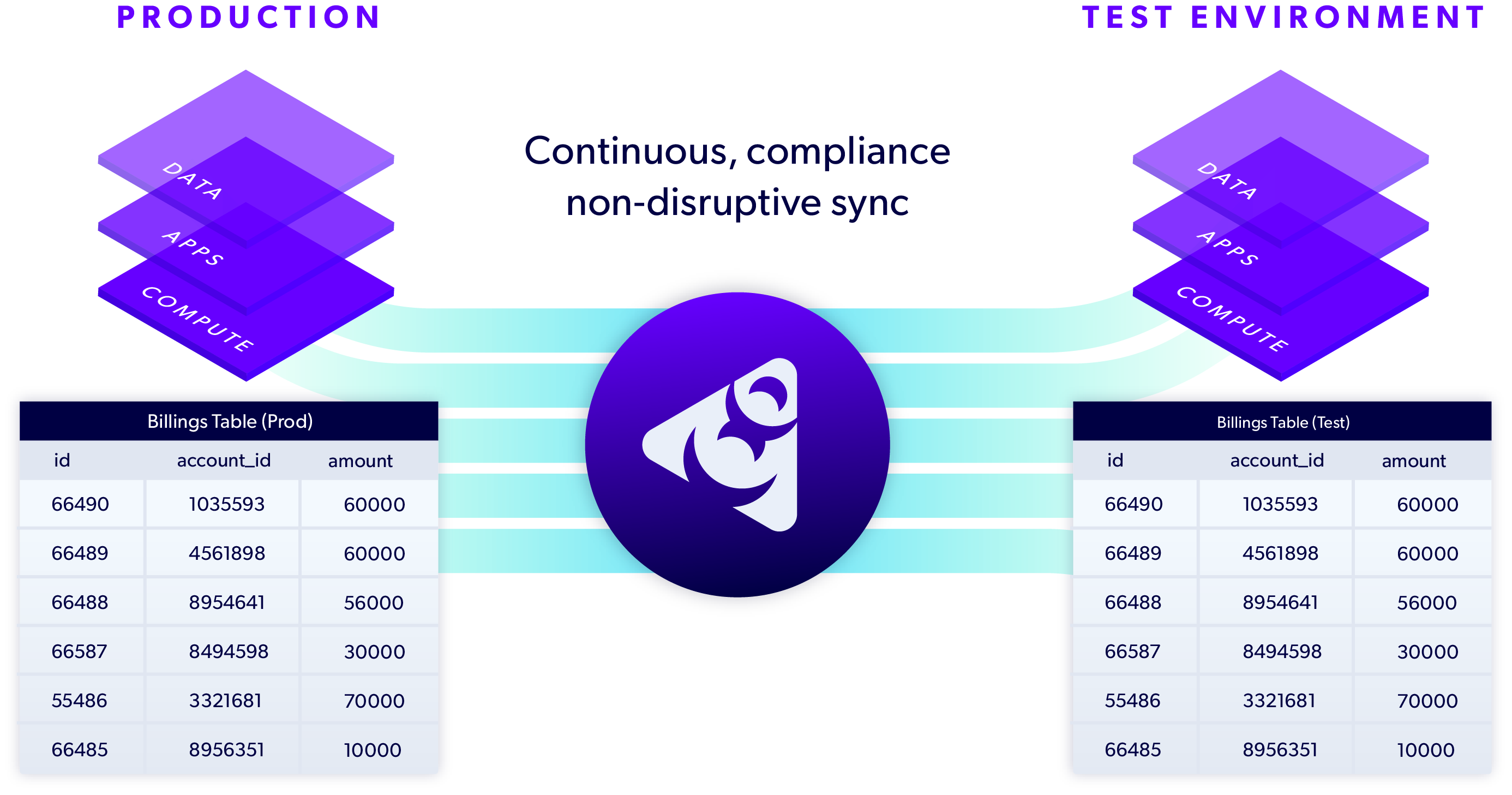
Real data from production environments provide the most complete test coverage, but can add friction without modern DevOps test data management tooling because of security controls around sensitive data. On top of that, moving multitudes of data can result in higher costs and slower speeds. Your production data isn’t as useful if it’s delivered two weeks late.
Data Subsets
Test data subsets can improve static test performance while providing some saving on compute, storage, and software licensing costs. However, subsets do not provide sufficient test coverage for application completeness or integration testing needs. Subsets intrinsically omit test cases and contain sensitive values because it's still a direct copy of production values.
Masked Data
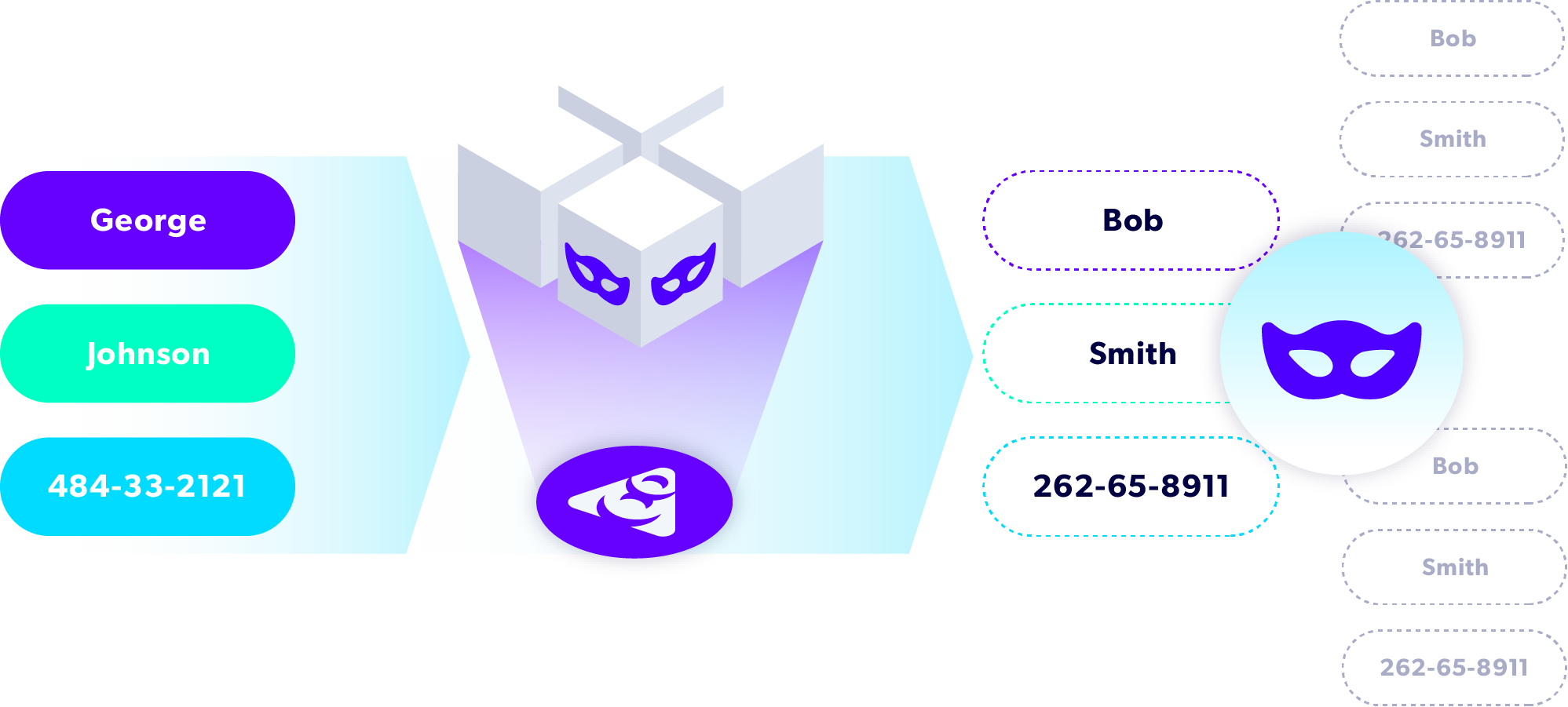
Production data obfuscation using masking techniques helps teams leverage existing data in a compliant manner to quickly provision test data that meets regulatory requirements such as PCI, HIPAA, and GDPR. It’s important that I note the different kinds of data masking — such as dynamic and static data masking.
- Dynamic masking will simply omit the data, replacing the data values with asterisks or Xs, but it maintains the sensitive data behind the scenes. For example, a Social Security Number might appear as XXX-XX-XXXX, which is not useful from a testing perspective and permits reidentification of the data.
- Static data masking — which is what Delphix uses — takes all the data from production, leverages algorithms to identify sensitive data, and applies PII data masking to sensitive fields while keeping only relevant data for testing. This enables test data provisioning of realistic values without introducing unsafe levels of risk. Static data masking is irreversible, ensuring high-quality data privacy and security.
Synthetic Data
Synthetic test data, fake test data made from scratch, intrinsically contains no personally identifiable or sensitive information. This makes synthetic data creation an appealing choice for initial prototyping of new features or model exploration of test data sets.
Generated synthetic data can use algorithms to ensure that it remains realistic and has referential integrity. This synthetic data can supplement masked data, for well-rounded test data management. While it’s not fit for certain use cases like debugging, synthetic data generation is useful for improving end-to-end testing quality.
Combination
Often, companies use all of the above methods. Leveraging a combination of these can help your company effectively meet its test data management needs. Our 2026 State of Data Compliance and Security Report found that 86% of surveyed organizations use static masking, 60% use dynamic, and 51% use synthetic data.
Here are some example scenarios of why your company may need multiple methods:
- Your app teams use a full copy of masked production, but because each member wants their own copy, you need to subset to make the costs work.
- Your app teams are developing a new feature but want to make sure it’s backwards compatible, so they’ll take masked data and synthetically add additional information to it.
- You already have a synthetic dataset, but you only need the first 100 values, not all 500,000.
Use Cases for Test Data Management
An effective test data management platform will help you and your DevOps teams provision high-quality, compliant data when and where you need it.
Because your various types of test data are curated for different application and team needs, you must have a way to manage it all. Test data management involves:
- The synchronization of multiple data sources from production.
- Sensitive data discovery.
- Masking sensitive data.
- Versioning copies.
- Multicloud distribution of test data.
Delphix, for example, unites data masking, virtualization, and governance to simplify how you handle, access, and version data while simultaneously ensuring compliance. Having these capabilities through Delphix’s self-service test data management platform can enable you to deliver and refresh test data in minutes.
Back to topWhy is Test Data Management Important?
Test data management is important because it supports agile development and automated testing. By providing timely access to fresh relevant data downstream for code development, automated tests, troubleshooting, and validation, modern test data management solutions help organizations improve:
- Application development speed.
- Code quality.
- Data compliance.
- Sustainability initiatives.
Looking for your perfect test data management tool? Check out The Gorilla Guide to Selecting the Right DevOps TDM Solution.
WEBINAR
Discover the Company-Wide Impact of Test Data Management
While test data management's effect on DevOps teams and efficiency clear, you may not realize just how much of a difference it can make on your company's ROI. In our recent Delphix webinar, my colleagues Aaron Jensen and Larry Morgan detail how effective test data management increases customer satisfaction, cost savings, and more. See all the benefits for yourself:
Back to top
Common Test Data Management Challenges
Application development teams need fast, reliable test data but are constrained by the speed, quality, security, and costs of moving data to environments during the software development lifecycle (SDLC). Below are the most common challenges that organizations face when it comes to managing test data.
Handling Sensitive Data
Organizations often struggle to quickly meet compliance and data privacy regulations at test data provisioning, while also reducing data friction for AppDev and software test teams. A test data management tool helps CIOs and CISOs to administer security controls such as data masking, authorization, authentication, fine-grained data access management, and audits logs in downstream environments as part of test data management processes.
Slow, Manual, High-Touch Provisioning
Test environment provisioning is a slow, manual, and high-touch process. Most IT organizations rely on a request-fulfill model, in which developers and testers find their requests queued behind others. Because it takes significant time and effort to create test data, it can take days, or even weeks to provision updated data for an environment.
Research backs this up. According to the Perforce Delphix 2026 Test Data Management Report for AI-Ready Enterprises, 99% of respondents wait longer than one business day for a fresh full production copy of test data, and 42% wait weeks or months. Only 1% get their data when they actually need it.
Often, the time to turn around a new environment is directly correlated to how many people are involved in the process. Enterprises typically have four or more administrators involved in setting up and provisioning data for a non-production environment. Not only does this process place a strain on operations teams, but it also creates time sinks during test cycles and slows the pace of application delivery.
Lack of High-Fidelity Data
Development teams often lack access to test data that is fit for purpose. For example, depending on the release version being tested, a developer might require a data set as of a specific point in time.
But all too often, they are forced to work with a stale copy of data due to the complexity of refreshing an environment. The 2026 Test Data Management Report for AI-Ready Enterprises found that 39% of enterprise organizations have data quality or validity issues, and 43% rank consistent, high-quality data as their top priority for test data automation.
Not having high-fidelity data can result in lost productivity due to time spent resolving data-related issues and increases the risk of data-related defects escaping into production.
Friction in Release Cycles
For many applications, such as those processing credit card numbers, patient records, or other sensitive information, static data masking is critical to ensuring regulatory compliance and protecting against data breaches.
According to IBM and the Ponemon Institute, the cost of a data breach averages $4.4 million. However, masking sensitive data often adds operational overhead. An end-to-end masking process may take an entire week because of complexity for managing referential integrity across multiple tables and databases.
Rising Storage Costs
IT organizations create multiple, redundant copies of test data, resulting in inefficient use of storage. To meet concurrent demands within the confines of storage capacity, operations teams must coordinate test data availability across multiple teams, applications, and release versions. As a result, development teams often contend for limited, shared environments, resulting in the serialization of critical application projects.
Regardless of your challenge, adopting test data management best practices can offer a path forward.
WHITE PAPER
Transform DevOps with Modern Test Data Management
Successful application development requires streamlined test data processes. Learn how DevOps test data management addresses the biggest challenges in modern software development, from eliminating data constraints to improving speed, quality, and compliance. Get your copy of the white paper today.
Back to top
Test Data Management Benefits
If you’re looking for increased DevOps efficiency, I recommend an effective test data management strategy. Implementing one will streamline DevOps and help address the aforementioned challenges, as well as give you new benefits. Here are some of the benefits I’ve seen at companies with the right test data management strategy:
Accelerated Release Cycles
All too often, development and QA teams experience slow test data provisioning and bottlenecks, as they wait hours, days, or weeks for data and environments to prepare. When virtual test data copies are available in minutes, these teams regain their competitive edge and work more efficiently. With Delphix, I’ve seen companies provision test data 100x faster and accelerate releases by 2x.
See how Dell streamlined their developer experience >>
Improved Application and Software Quality
Teams getting the right data at the right time is a classic shift-left strategy. With data on-demand, they’ll be able to create higher quality applications and software. Otherwise, engineers will use aged test data, inaccurate self-generated data, or worse, no data at all. Effective test data management ensures that data is timely, realistic, and compliant, which helps keep your engineers focused on the task at hand, without context switching. With Delphix, companies can also develop applications 58% more quickly.
Discover how Proximus reduced potential defects >>
Less Cloud Compute and Storage Burden
Test data management helps minimize the amount of data copies used at an organization. According to the 2026 Test Data Management Report for AI-Ready Enterprises, 50% of respondents reported that for each dataset they have in production, they have 5 to 6 copies of that dataset in non-production.
These additional copies can greatly increase storage costs. Delphix enables you to store data with 100x space efficiency and reduce storage footprints by 10x. Data virtualization can also help you decrease storage costs by 80%.
Learn about Delta Dental’s storage savings >>
Automated Compliance
In our State of Data Compliance and Security Report, all surveyed organizations reported having data in non-production that is subject to privacy regulations. Automated compliance will eliminate that concern surround regulatory non-compliance and minimize data breach risk, as static data masking can be built right into the data provisioning process. A recent IDC study found that Delphix enables you to mask and protect 77.2% more data and data environments* — no extra coding required.
See how Sky Italia simplified GDPR compliance >>
Less Administrative Burden
According to recent research from Perforce Blazemeter, 64% of organizations cite manual work to manage test data as a major challenge. I’ve seen this concern from many customers, and the right test data management solution will address it. For example, Delphix offers self service capabilities, enabling organizations to bookmark, rewind, and re-baseline your database in minutes regardless of the size of the database. No more submitting a ticket and playing the waiting game — you get what you need when you need it and improve the developer experience.
Learn how self-service transformed AMN Healthcare’s operations >>
Back to topA Look into the Test Data Management Process
When enterprises leverage the right test data management tool, they can see new efficiencies and get the most out of their data operations. Here's a step-by-step example of what the test data management workflow would look like with Delphix:
- Sourcing data: Once the Delphix platform is established, it syncs with your data sources and creates data timelines within the platform.
- Masking data: Upon discovering sensitive data, Delphix automatically masks and protects it. Masking the data will change its real, sensitive values into fictitious versions that are still usable for application development and testing.
- Distributing data: Virtualization creates fast, agile copies of the data for easy delivery when and where the data is needed.
- Leveraging data: Access control and governance patterns allow administrators to grant self-service capabilities and enable developers to refresh, rewind, and bookmark data — simplifying how they get data for their use cases.
Get Demo
Get Started with Perforce Delphix for Test Data Management
For large enterprises navigating digital transformation and innovation, Perforce Delphix offers a powerful solution tailored to your test data management needs. With Delphix, experience seamless integration of automated data delivery, robust masking, and synthetic data generation, ensuring your teams have access to on-demand test data across diverse environments.
Related Reading >> What is Perforce Delphix?
Take Advantage of Next-Generation Test Data Management
Delphix test data management solutions make it easy for you to deliver realistic, compliant data in minutes, not days. Plus, Delphix recently introduced AI-powered synthetic data generation, giving you the best of both worlds (masking + synthetic).
Further reading >> Why Companies Choose Perforce Delphix for Test Data Management
Ensure Data Privacy & Security
Automate sensitive data discovery and data compliance across your enterprise. Whether you’re data masking for HIPAA or GDPR, Delphix can maintain consistency and protection in all use cases, so you can mitigate risk related to breaches.
Get Cost-Efficient, Cloud-Ready Test Data Delivery Anywhere
Unburden your organization from high cloud compute and storage costs. Delphix offers space-efficient, virtual data copies and ephemeral data environments, to shrink and free up space in your cloud storage. Your teams can use self-service capabilities to get data copies when and where they need them.
Explore how Delphix can help you test faster with greater confidence. Request a no-pressure demo from our product experts today to get started.

Get the Report
Your Peers Have Spoken.
Perforce is a Customers’ Choice in the Gartner® Peer Insights™ 2025 Voice of the Customer Report for Test Data Management (TDM).*
Gartner, Gartner Peer Insights Voice of the Customer, Test Data Management, Peer Contributors, 30 July 2025,
Gartner, Peer Insights and the Gartner Peer Insights Customers' Choice badge are trademarks of Gartner, Inc. and/or its affiliates.
Gartner Peer Insights content consists of the opinions of individual end users based on their own experiences, and should not be construed as statements of fact, nor do they represent the views of Gartner or its affiliates. Gartner does not endorse any vendor, product or service depicted in this content nor makes any warranties, expressed or implied, with respect to this content, about its accuracy or completeness, including any warranties of merchantability or fitness for a particular purpose.
*IDC Business Value White Paper, sponsored by Delphix, by Perforce, The Business Value of Delphix, #US52560824, December 2024